May 13, 2026
How Heat Exchangers Work
How Heat Exchangers Work
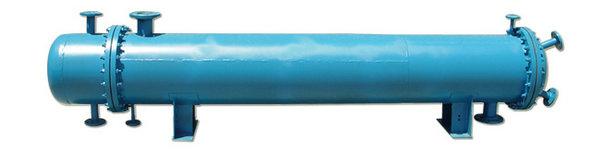
Heat exchangers are vital pieces of equipment used across industrial production, energy supply, and daily life, designed to transfer thermal energy between two or more fluids—liquids, gases, or a combination of both—without allowing the fluids to come into direct contact. From power plants generating electricity to air conditioners regulating indoor temperatures, from chemical reactors maintaining reaction temperatures to refrigerators preserving food, heat exchangers play an indispensable role in facilitating efficient heat transfer. To fully understand their functionality, it is essential to explore their core working principles, heat transfer modes, common types, and key factors that influence their efficiency.
Core Working Principle
The fundamental principle behind all heat exchangers is heat transfer, which follows the second law of thermodynamics: heat naturally flows from a high-temperature substance to a low-temperature substance until both reach thermal equilibrium. In a heat exchanger, this transfer occurs through a solid heat transfer surface—such as a tube wall, metal plate, or fin—that separates the hot and cold fluids. The hot fluid releases thermal energy, which is conducted through the heat transfer surface to the cold fluid, which then absorbs the energy.
The primary goal of a heat exchanger is to either heat a cold fluid to a required temperature (e.g., heating water in a boiler) or cool a hot fluid to a specified level (e.g., cooling engine oil in an automobile). To achieve efficient heat transfer, heat exchangers are engineered to maximize the contact area between the fluids and the heat transfer surface, as well as enhance fluid flow velocity—two key factors that boost heat transfer efficiency.
Three Main Modes of Heat Transfer
Heat transfer within a heat exchanger occurs through three basic modes: conduction, convection, and radiation. In most industrial applications, conduction and convection work together as the primary mechanisms, while radiation is typically negligible in low-temperature settings.
1. Heat Conduction
Conduction is the transfer of thermal energy through molecular motion in a solid or stationary fluid, with no actual movement of the material itself. In a heat exchanger, heat from the hot fluid first conducts through the heat transfer surface (e.g., the wall of a heat transfer tube) to the cold side of the surface, then transfers into the cold fluid. The efficiency of conduction depends on the thermal conductivity of the heat transfer material—materials like copper and aluminum, which have high thermal conductivity, transfer heat much faster than materials like carbon steel.
For instance, in a shell-and-tube heat exchanger, the hot fluid flows inside the tubes, and the cold fluid flows outside. Heat from the hot fluid conducts through the tube wall to the cold fluid, completing the transfer process. The thickness of the tube wall also affects conduction: thinner walls reduce thermal resistance and speed up heat transfer, while thicker walls have the opposite effect.
2. Heat Convection
Convection is the transfer of thermal energy through the movement of fluids (liquids or gases). When a fluid flows over a heat transfer surface, the fluid molecules in direct contact with the surface absorb or release heat, then move to other parts of the fluid, distributing the heat throughout. Convection is divided into two types: natural convection (caused by density differences due to temperature changes) and forced convection (driven by pumps, fans, or other mechanical devices).
Forced convection is widely used in industrial heat exchangers to enhance efficiency. For example, in a plate heat exchanger, pumps drive hot and cold fluids through narrow channels between corrugated plates at high speed. The turbulent flow created by the corrugated structure increases the contact frequency between fluid molecules and the plate surface, significantly improving convective heat transfer. Fluid flow velocity is a critical factor here: higher velocity leads to stronger convection and better heat transfer, though excessively high velocity can increase pressure loss and energy consumption.
3. Heat Radiation
Radiation is the transfer of thermal energy in the form of electromagnetic waves, which requires no medium and can occur in a vacuum. In most heat exchangers—especially those used in low-temperature applications like air conditioners and refrigerators—radiation plays a minimal role in total heat transfer. However, in high-temperature heat exchangers (e.g., boiler flue gas heat exchangers or furnace heat exchangers), radiation becomes a significant contributor.
For example, in a boiler flue gas heat exchanger, high-temperature flue gas (above 1000℃) radiates large amounts of heat to the heat transfer surface. This heat is then transferred to the cold fluid through conduction and convection. The efficiency of radiation depends on the surface area of the heat transfer surface and its emissivity—the ability to emit thermal radiation.
Common Types of Heat Exchangers and Their Working Processes
Heat exchangers come in various structural designs, each tailored to specific applications. Below are the three most common industrial types, along with their detailed working processes:
1. Shell-and-Tube Heat Exchanger (Most Widely Used)
A shell-and-tube heat exchanger consists of a cylindrical shell (pressure vessel), a bundle of parallel heat transfer tubes, tube sheets (to fix the tube bundle), and baffles (to guide fluid flow). Its working process is as follows:
The hot fluid enters the tube bundle through the tube-side inlet nozzle, flows through the inside of the tubes, releases heat to the tube walls during flow, and exits through the tube-side outlet nozzle.
The cold fluid enters the shell through the shell-side inlet nozzle, flows outside the tubes under the guidance of baffles (which force the fluid into a zigzag path to increase contact time and area with the tubes), absorbs heat from the tube walls, and exits through the shell-side outlet nozzle.
Heat is transferred from the hot fluid to the cold fluid through the tube walls, completing the heat exchange. This type is ideal for high-temperature, high-pressure, and large-flow applications, making it widely used in the petroleum, chemical, and power industries.
2. Plate Heat Exchanger
A plate heat exchanger is composed of a series of parallel, corrugated metal plates, gaskets (to seal gaps between plates), and a frame (to compress the plates). Its working process is as follows:
Hot and cold fluids alternately enter the gaps between the plates through inlet nozzles on the frame. Each gap forms a narrow flow channel, and the corrugated plate structure enhances fluid turbulence.
As the hot fluid flows through one channel, it transfers heat to the plate; the cold fluid flowing through the adjacent channel absorbs heat from the plate. In most cases, the fluids flow in opposite directions (counterflow), which maximizes the temperature difference between the two fluids and improves heat transfer efficiency.
After heat exchange, the hot fluid exits through the hot fluid outlet, and the cold fluid exits through the cold fluid outlet. Plate heat exchangers are compact, highly efficient, and easy to disassemble for cleaning, making them suitable for the food, pharmaceutical, and air conditioning industries.
3. Finned-Tube Heat Exchanger
A finned-tube heat exchanger is based on a tube bundle, with thin metal fins attached to the outer surface of the tubes to increase the heat transfer area. Its working process is as follows:
A fluid with a high heat transfer coefficient (e.g., liquid) flows inside the tubes, while a fluid with a low heat transfer coefficient (e.g., gas) flows outside the tubes and over the fins.
Heat from the internal fluid conducts through the tube walls to the fins, then transfers to the external gas through convection. The fins greatly increase the contact area between the tube bundle and the gas, effectively improving heat transfer efficiency between liquids and gases.
This type is widely used in air conditioning systems (evaporators and condensers), power plant air preheaters, and industrial waste heat recovery systems.
Key Factors Influencing Heat Transfer Efficiency
The efficiency of a heat exchanger depends on several factors, including its design, fluid properties, and operating conditions. The most critical factors are:
Heat Transfer Surface: A larger surface area, high thermal conductivity material, and clean surface (free of scale or dirt) all reduce thermal resistance and improve efficiency. Fouled surfaces, on the other hand, act as insulators and hinder heat transfer.
Fluid Flow Velocity: Higher velocity enhances convection, reduces the thickness of the "boundary layer" (a thin layer of slow-moving fluid near the heat transfer surface), and improves efficiency. However, excessive velocity increases pressure loss and energy use.
Temperature Difference: A larger temperature difference between the hot and cold fluids accelerates heat transfer. This difference is typically determined by the application and cannot be easily adjusted.
Fluid Physical Properties: Fluids with high thermal conductivity and specific heat capacity transfer heat faster, while highly viscous fluids have poor fluidity and increase thermal resistance.
Conclusion
Heat exchangers operate on the basic principle of heat transfer, using conduction, convection, and (in some cases) radiation to transfer thermal energy between non-contacting fluids. Their design—whether shell-and-tube, plate, or finned-tube—is tailored to the specific needs of the application, with the goal of maximizing heat transfer efficiency. By understanding how these devices work, their key components, and the factors that influence their performance, we can better utilize them in industrial and daily settings, ensuring energy efficiency and operational reliability.
Related articles
May 13, 2026
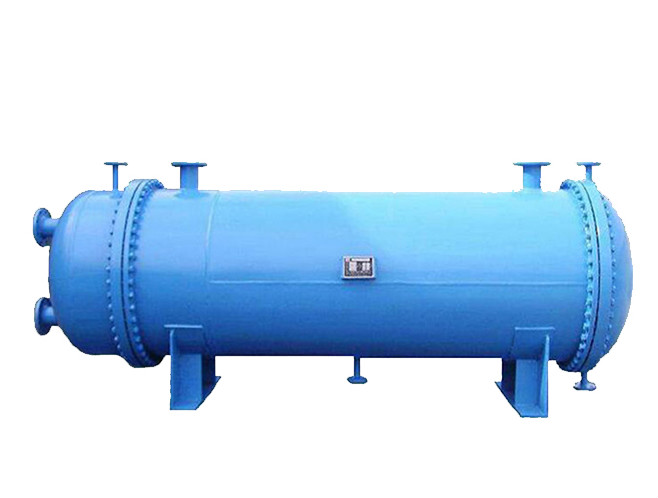
Will Heat Exchangers Clog?
Will Heat Exchangers Clog?
Read more →
May 13, 2026
Pressure Vessels: Vertical vs. Horizontal Configuration — Comparing Footprint, Separation Efficiency, and Total Installed Cost
Pressure Vessels: Vertical vs. Horizontal Configuration — Comparing Footprint, Separation Efficiency, and Total Installed Cost
Read more →May 13, 2026
Is a Shell and Tube Heat Exchanger a Pressure Vessel?
Is a Shell and Tube Heat Exchanger a Pressure Vessel?
Read more →