May 13, 2026
Is a Shell and Tube Heat Exchanger a Pressure Vessel?
Is a Shell and Tube Heat Exchanger a Pressure Vessel?
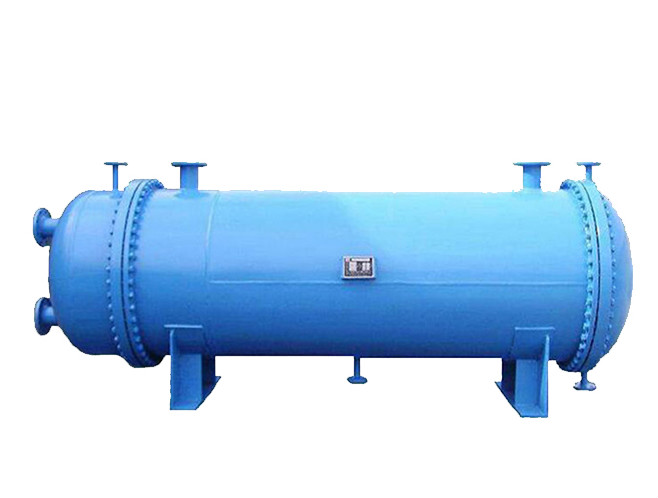
The Short Answer Is Straightforward — But There’s a Catch You Need to Watch For
Yes. A shell and tube heat exchanger is fundamentally a pressure vessel.
Said it plainly. Put it on the record. No hedging. The shell itself is literally a cylindrical pressure vessel containing a tube bundle. Both the shell side and the tube side hold fluids at pressures that typically sit well above atmospheric.
But here‘s the nuance that trips up procurement people. Not every heat exchanger is regulated and stamped as a pressure vessel under applicable codes. The threshold depends on pressure, volume, fluid hazard, and jurisdiction.
The distinction matters more than you think. Get it wrong and you face failed regulatory inspections, voided insurance, and worst of all — somebody getting hurt.
Let me break down exactly when a shell and tube unit qualifies, what codes apply, and where the exceptions hide.
Table of Contents
· From an Engineering Standpoint – The Shell Is a Vessel
· The ASME BPVC Position – When the Rules Kick In
· Europe Under PED – Consistently Stricter
· China TSG 21 – A Different Threshold Structure
· Table: Pressure Vessel Classification Thresholds by Jurisdiction
· Where the Line Blurs – Three Key Exceptions to Watch
· The Multi-Chamber Rule – One Unit, Multiple Classifications
· What This Means for Procurement
· FAQ
· Summary & CTA
From an Engineering Standpoint – The Shell Is a Vessel
Let‘s start with basic physics before we wade through code language.
A shell and tube heat exchanger consists of a cylindrical shell (the outer casing) containing a bundle of tubes. One fluid flows through the tubes; another flows over the tubes through the shell side. Both compartments are designed to contain fluid under pressure.
The shell itself is manufactured from rolled and welded steel plate with dished heads on each end. That is exactly the same construction method used for any unfired pressure vessel. The tubes, tubesheets, nozzles, and flanges are all pressure-retaining components designed to a pressure vessel code.
Industry sources treat the classification as settled. One technical summary states flatly that heat exchangers are classified as pressure vessels and are designed to ASME Section VIII and TEMA standards. Another puts it this way: heat exchangers, classified as pressure vessels, require advanced NDT inspection to ensure safety and integrity in industrial operations.
But physical design and regulatory classification are not the same thing. The engineering truth — that a shell and tube exchanger is a pressure vessel — is universal. The legal and regulatory truth depends on where it goes and what pressure it sees.
Which brings us to the codes.
The ASME BPVC Position – When the Rules Kick In
ASME Boiler and Pressure Vessel Code Section VIII is the governing standard for unfired pressure vessels in North America and much of the world.
Section VIII Division 1 applies to vessels operating at internal or external pressures exceeding 15 psig (approximately 0.103 MPa). That is roughly 1 bar gauge — a threshold low enough to catch most industrial shell and tube units. The code explicitly covers both fired and unfired vessels. Pressure may come from an external source or from the application of heat, direct or indirect.
So here is the practical test for a shell and tube heat exchanger under ASME rules:
· Design pressure above 15 psig (1.03 bar) → Falls under ASME VIII
· Design pressure equal to or below 15 psig → May still be built to ASME VIII standards but not legally required to be ASME stamped (depends on jurisdictional adoption)
· Internal volume matters for small vessel exemptions, not for classification itself
· The pressurized components of the shell and tube exchanger are designed in accordance with a pressure vessel design code such as ASME VIII or BS5500. But ASME VIII alone does not fully address the unique features of heat exchangers. That is where TEMA (Tubular Exchanger Manufacturers Association) enters. TEMA is a supplementary code designed to work alongside ASME VIII, providing additional requirements for minimum thicknesses, corrosion allowances, tolerances, and testing specific to shell and tube equipment.
TEMA uses a three-letter designation system that fully defines the exchanger type — front head, shell type, and rear head. Common designations include BEM (bonnet, single-pass shell, fixed tubesheet) and AES (channel, single-pass shell, floating head). TEMA offers three construction classes for different service severities. Class R applies to severe requirements for petroleum processing applications. Class C serves moderate requirements for commercial and general process applications. Class B is designated for chemical process services.
API 660 is the petroleum industry‘s specification for shell and tube heat exchangers. It covers heaters, condensers, coolers, and reboilers — but notably excludes vacuum-operated steam surface condensers and feed-water heaters. API 660 references ASME BPVC Section VIII for pressure-retaining components. An exchanger built to API 660 automatically meets pressure vessel requirements because API 660 requires compliance with ASME VIII.
One more wrinkle. ASME also provides a UM (miniature) stamp classification for unfired pressure vessels that meet specific volume and pressure limits. UM vessels have reduced inspection requirements compared to standard U-stamped vessels. Smaller shell and tube units may fall into this category depending on their dimensions.
Europe Under PED – Consistently Stricter
The European Pressure Equipment Directive (PED) 2014/68/EU takes a different approach.
The EU guidelines on PED address the question directly: Which type of pressure equipment is a heat exchanger? The answer is unambiguous — heat exchangers are considered to be vessels.
Unlike ASME‘s pressure-only threshold, PED classification uses a matrix combining maximum allowable pressure (PS), internal volume (V) or nominal diameter (DN), and fluid group (hazardous or not). The directive then assigns the equipment to one of four risk categories: I, II, III, or IV.
Certification requirements escalate with category. Category I requires only Module A (internal production control). Category IV — the highest risk level — requires Module B+D, B+F, G, or H1, involving notified body approval at multiple stages.
There is, however, a narrow exception. Heat exchangers that consist entirely of straight or bent pipes connected by circular pipe headers are classified as piping — but only if three conditions are met simultaneously: air is the secondary fluid; they are used in refrigeration, air conditioning, or heat pump systems; and the piping aspects are predominant. If even one of those conditions fails, back to vessel classification.
For a typical carbon steel or stainless steel shell and tube exchanger used in chemical or oil and gas service, PED vessel classification is unavoidable. The CE mark on the nameplate tells you the unit has been assessed against PED requirements by a notified body.
One nuance specific to PED. For heat exchangers that may straddle the vessel-piping boundary, the guideline provides a calculation method. Abstract categories are determined under both vessel and piping assumptions. If the vessel classification yields a higher category than the piping classification, the entire heat exchanger must be classified as a vessel using the total volume (headers plus connecting tubes). The directive does not allow you to choose the lower-risk path.
China TSG 21 – A Different Threshold Structure
China‘s regulations take a unique approach worth understanding if you source from or sell into the Chinese market.
TSG 21-2016, the Supervision Regulation on Safety Technology for Stationary Pressure Vessels, applies to equipment meeting three simultaneous conditions:
· Working pressure ≥ 0.1 MPa (approximately 14.5 psig)
· Volume ≥ 0.03 m³ AND internal diameter ≥ 150 mm
· Containing gas, liquefied gas, or liquid whose operating temperature is at or above its boiling point at standard pressure
· Within TSG 21, heat exchange pressure vessels are specifically categorized as type E (换热压力容器). These are vessels used to complete heat exchange between media, transferring heat from the high-temperature medium to the low-temperature medium through heat transfer surfaces. The regulation explicitly lists shell and tube types as falling under this category.
TSG 21 then classifies vessels into Category I, II, or III based on the combination of design pressure, volume, and media group. Group 1 media are highly hazardous — extreme or high toxicity, explosive. Group 2 covers everything else. A small exchanger with low pressure and non-hazardous media may be Category I with minimal regulatory burden. A large exchanger with hazardous media may be Category III with full third-party inspection requirements.
Importantly, TSG 21 explicitly excludes certain heat exchanger types from its scope — including plate heat exchangers, spiral plate heat exchangers, air-cooled heat exchangers, and cooling coils. Shell and tube units are not excluded.
One subtle point for multi-chamber vessels like shell and tube exchangers: TSG 21 requires that each pressure chamber (shell side and tube side) be classified separately based on its own design pressure and volume. The vessel then takes the highest category among its chambers for overall regulatory administration. So if the tube side is Category I and the shell side is Category III, the entire exchanger is managed as Category III.
Table: Pressure Vessel Classification Thresholds by Jurisdiction
Jurisdiction | Governing Code | Pressure Trigger | Volume/Diameter Condition | Fluid Hazard Consideration | Exchanger Classification |
USA / International | ASME BPVC Section VIII Div 1 | > 15 psig (~1.03 bar) | None for classification (miniature UM stamp for small vessels) | No (treated uniformly) | Vessel — requires stamp |
EU | PED 2014/68/EU | Always considered — matrix with V/DN | Yes — part of category matrix | Yes — fluid group 1 vs 2 | Vessel — exception: pipe-type for air/refrigeration only |
China | TSG 21-2016 | ≥ 0.1 MPa (~14.5 psig) | ≥ 0.03 m³ and ≥ 150 mm ID | Yes — group 1 vs 2 | Vessel — type E (换热压力容器) |
Note: Pressure thresholds are approximate for comparison. Actual classification requires full application of each code‘s definitions and tables. PED uses a sliding scale; the values shown represent typical trigger points, not the complete matrix.
Where the Line Blurs – Three Key Exceptions to Watch
Not every shell and tube type device requires a pressure vessel stamp. Here are the situations where the line gets fuzzy.
Low-pressure exchangers below code thresholds. If both shell side and tube side operate at pressures below the applicable code threshold — 15 psig under ASME VIII, 0.5 bar for certain fluid groups under PED — the unit is not legally required to be constructed to pressure vessel codes. However, many manufacturers still build to code standards voluntarily for liability reasons.
PIP VESSM001 small vessels. The Process Industry Practices (PIP) standard VESSM001 provides requirements for the construction of small pressure vessels and heat exchangers with limited design conditions. This covers units that fall outside the scope of standard ASME or API requirements due to their small size. Three classes are defined based on size and maximum allowable working pressure. A small shell and tube exchanger meeting these criteria may be built to this specification rather than full ASME VIII.
PED pipe-type heat exchanger exception. The narrow exception noted earlier: if the exchanger is built entirely from straight or bent pipes with circular pipe headers, and it meets the three conditions about secondary fluid being air with use in refrigeration, air conditioning, or heat pump systems, and piping aspects are predominant — then it is classified as piping. Not many shell and tube units qualify here because typical construction uses dished heads and tube sheets, not pipe headers. But for specialized refrigeration units with all-pipe construction, this exception can apply.
One more nuance. Some lower-cost shell and tube units used in non-code applications like small hydraulic oil coolers or diesel generator jacket water coolers may not bear any pressure vessel stamp. Their design pressures may fall below code thresholds. But any responsible buyer should confirm this explicitly rather than assume. An unstamped unit that fails under pressure is still a failure, regardless of code status.
The Multi-Chamber Rule – One Unit, Multiple Classifications
This is where things get interesting for shell and tube exchangers.
Unlike a simple storage tank with one internal chamber, a shell and tube exchanger has two pressure chambers: the shell side and the tube side. Each can operate at different pressures, different temperatures, and contain different fluid hazard groups.
Under ASME VIII, both chambers must be designed to code if either exceeds the pressure threshold. The same applies under PED. Under TSG 21, each pressure chamber is classified separately based on its own design pressure and volume, and the vessel as a whole takes the highest category among its chambers.
What does this mean practically? Suppose an exchanger has:
·
Shell side: 2.0 MPa, 0.5 m³, group 2 (non-hazardous) → Category II
·
·
Tube side: 0.8 MPa, 0.4 m³, group 2 (non-hazardous) → Category I
·
The entire exchanger is managed as Category II, not Category I. The higher category governs.
The design verification for shell side and tube side may be performed by different certified inspection agencies. However, the final assembly requires that both sides meet their respective classification requirements and that the overall unit is certified as a complete pressure vessel.
What This Means for Procurement
If you are sourcing a shell and tube heat exchanger for industrial service — oil and gas, chemical, power, pharmaceutical — here is what you need to verify with your supplier.
Ask for the design code and stamp. Is it ASME Section VIII Division 1 or Division 2? U-stamped? UM-stamped? PED-certified with CE mark? TSG 21 registered? A supplier who cannot name the applicable pressure vessel code is a red flag.
Ask for separate shell side and tube side design conditions. Multi-chamber classification matters. The supplier should be able to provide design pressure, design temperature, and volume for each side.
Verify hydrostatic test pressure. Standard pressure vessel code practice requires hydrostatic test at 1.3 × design pressure (ASME VIII) or as specified by the applicable code. The test certificate should be part of the documentation package.
Do not assume small means exempt. Small shell and tube exchangers can still fall under pressure vessel regulations depending on pressure and fluid hazard. Verify against the thresholds in your jurisdiction.
Third-party inspection confirms compliance. For critical service, specify third-party inspection by an authorized inspection agency (AIA for ASME, notified body for PED, special equipment inspection institute for TSG 21). The marginal cost is usually 2–5% of the vessel price.
A note on liability. Unsure about this? Your insurance carrier may have specific requirements for pressure vessel certification regardless of code exemptions. Check with your carrier before accepting an unstamped unit into a covered facility.
FAQ
Q: Every shell and tube heat exchanger automatically a pressure vessel under all circumstances?
A: Physically, yes — any closed container holding pressurized fluid is a pressure vessel. Regulatorily, no — small units below code thresholds may not require stamping. The engineering and legal definitions are not identical.
Q: What pressure threshold triggers ASME Section VIII classification?
A: Internal or external pressure exceeding 15 psig (approximately 1.03 bar gauge).
Q: What is the difference between TEMA and ASME for shell and tube exchangers?
A: ASME VIII provides general pressure vessel design rules. TEMA provides supplementary requirements specific to shell and tube heat exchangers — minimum thicknesses, corrosion allowances, tolerances, testing, and the three-letter designation system. TEMA is not a standalone code; it is designed to supplement ASME VIII.
Q: Under PED, are all heat exchangers treated as vessels?
A: Almost all. The only exception is heat exchangers built entirely from straight or bent pipes with circular pipe headers, used in refrigeration or HVAC with air as the secondary fluid, where piping aspects are predominant. Most shell and tube designs do not meet this exception.
Q: Does a shell and tube exchanger require two separate pressure vessel certifications — one for the shell and one for the tubes?
A: Under TSG 21, each pressure chamber is classified separately, but one overall vessel stamp applies. Under ASME VIII, both chambers are covered under the same vessel stamp when designed as a single unit. Under PED, the entire assembly is assessed as a single pressure equipment unit.
Q: Can I use a non-code shell and tube exchanger in an industrial plant?
A: Possibly, if operating pressures are below code thresholds and local jurisdiction does not require stamping. But corporate engineering standards, insurance requirements, and customer specifications frequently mandate code compliance regardless of legal exemption. Verify before purchasing.
Q: What documentation should I request to confirm pressure vessel compliance?
A: Manufacturer‘s data report (ASME Form U-1 or equivalent), material test reports (MTRs) for pressure-retaining components, hydrostatic test certificate, nameplate photo showing stamp (U, UM, CE, or TSG), and third-party inspection report if specified.
Summary
A shell and tube heat exchanger is a pressure vessel — not just in casual engineering conversation, but under the world‘s major codes. ASME Section VIII applies when pressure exceeds 15 psig. PED treats heat exchangers as vessels with a narrow exception for all-pipe refrigeration units. TSG 21 classifies shell and tube units as Type E heat exchange pressure vessels. TEMA supplements ASME with exchanger-specific rules.
The physics is straightforward. The regulatory application requires case-by-case verification based on pressure, volume, fluid hazard, and jurisdiction. Low-pressure or very small units may fall below code thresholds. But for any exchanger intended for industrial process service with significant pressure, code compliance is the baseline, not an option.
Need a shell and tube heat exchanger specified for pressure vessel compliance across multiple jurisdictions? Share your design conditions — shell side pressure, tube side pressure, volumes, fluids, and destination country. Our engineering team will map the applicable codes, identify required stamps (ASME U, PED CE, TSG 21 registration), and provide documentation to meet your regulatory requirements.
—Not sure whether your application requires a full ASME-stamped exchanger or a smaller non-code unit will suffice? Leave a comment or reach out directly. We respond within 48 hours with jurisdiction-specific guidance and, where available, reference to the relevant code clauses.
Related articles
May 13, 2026
Will Heat Exchangers Clog?
Will Heat Exchangers Clog?
Read more →
May 13, 2026
Pressure Vessels: Vertical vs. Horizontal Configuration — Comparing Footprint, Separation Efficiency, and Total Installed Cost
Pressure Vessels: Vertical vs. Horizontal Configuration — Comparing Footprint, Separation Efficiency, and Total Installed Cost
Read more →
May 13, 2026
How Heat Exchangers Work
How Heat Exchangers Work
Read more →