May 13, 2026
Pressure Vessels: Vertical vs. Horizontal Configuration — Comparing Footprint, Separation Efficiency, and Total Installed Cost
Pressure Vessels: Vertical vs. Horizontal Configuration — Comparing Footprint, Separation Efficiency, and Total Installed Cost
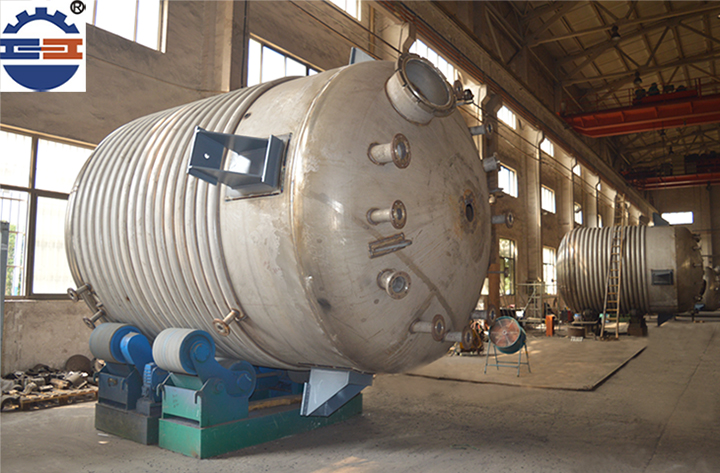
Table of Contents
Introduction: Two Orientations, Divergent Engineering Outcomes
The Orientation Decision: More Than Just a Space Constraint
Footprint and Layout: Where Vertical Gains the Upper Hand
Process Separation Performance: The Horizontal Advantage in Multi-Phase Flow
Structural Support and Foundation Costs: A Hidden Expense
Inspection Access and Maintenance: Comparing Downtime Requirements
Cost Comparison: Initial Fabrication vs. Long-Term Ownership
Real-World Application: Selecting a Two-Phase Separator for an Offshore Platform
Summary Comparison Table: Vertical vs. Horizontal Pressure Vessels
Frequently Asked Questions (FAQ)
Conclusion: Aligning Vessel Orientation with Operational Priorities
Engineering Support for Your Pressure Vessel Specification
Introduction: Two Orientations, Divergent Engineering Outcomes
A pressure vessel is defined by its function—storing or processing fluids under pressure—but its orientation is a fundamental design choice that ripples through every aspect of project execution. Vertical and horizontal pressure vessels may contain the same volume and withstand identical design pressures, yet they impose vastly different demands on plot space, structural steel, process efficiency, and maintenance access.
The selection between vertical and horizontal orientation is rarely arbitrary. According to a survey of engineering procurement and construction (EPC) firms conducted by Hydrocarbon Processing magazine, approximately 65% of two-phase separators in onshore facilities are specified as horizontal, while vertical vessels dominate in reflux drums and high-pressure scrubbers where compact footprint is paramount. Behind each decision lies a matrix of trade-offs involving capital cost, operational performance, and long-term maintainability.
This article compares vertical and horizontal pressure vessels across five practical dimensions—footprint and layout, process separation, structural support, inspection access, and total installed cost—providing a framework for engineers and project managers to make orientation decisions grounded in operational reality rather than habit.
The Orientation Decision: More Than Just a Space Constraint
The choice between a vertical and horizontal pressure vessel begins with a simple question: How much floor space is available? But the implications extend far beyond plot plan dimensions. A vertical vessel occupies minimal ground area—often just the diameter of its shell plus insulation and access clearances. This makes vertical orientation the default choice for congested process units, offshore platforms, and areas where real estate is expensive or physically constrained.
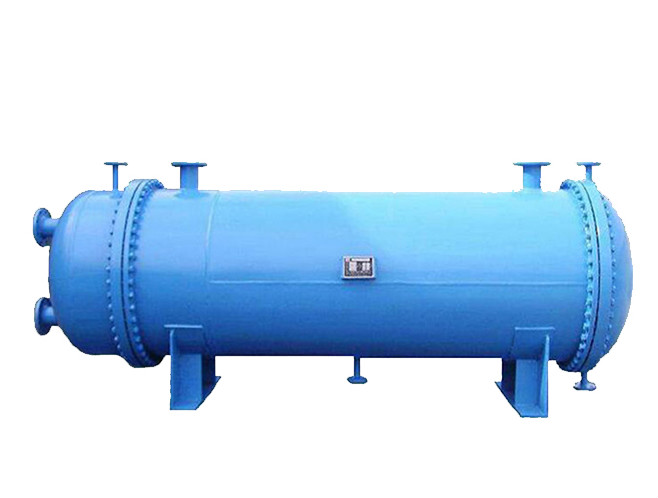
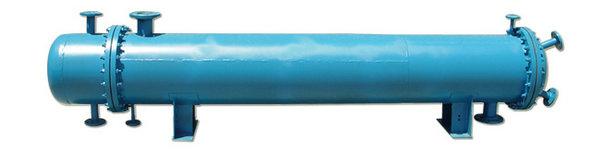
A horizontal pressure vessel, by contrast, demands significantly more footprint. Its length can extend 10 to 20 times its diameter, requiring long, uninterrupted spans of grade-level or elevated structural support. Yet this elongated geometry offers distinct advantages: it provides a larger liquid surface area for vapor-liquid separation, simplifies multi-compartment internals, and places critical components like manways and level instrumentation at accessible working heights.
The decision is not purely geometric. Process requirements—particularly the need for efficient phase separation—often override footprint considerations. In gas processing plants, horizontal separators routinely achieve 99% liquid knockout efficiency at design flow rates, whereas vertical separators of equivalent volume may only reach 95-97% under identical conditions, according to performance data published by the Gas Processors Association (GPA).
Footprint and Layout: Where Vertical Gains the Upper Hand
In congested industrial environments, every square meter of plot space carries a tangible cost—not just in land acquisition or lease rates, but in the complexity and expense of interconnecting piping, cable trays, and access ways. Vertical pressure vessels excel in such settings.
A vertical vessel with a 1.5-meter (5-foot) diameter and 6-meter (20-foot) tangent-to-tangent length occupies approximately 2.5 square meters of ground area, including insulation and maintenance clearances. A horizontal vessel of identical volume—requiring a length of perhaps 4.5 meters (15 feet) —demands a footprint of 12 to 15 square meters, plus additional space for saddle supports and pull-out clearance for bundle removal if equipped with a removable tube bundle.
This footprint disparity becomes even more pronounced when considering tall vertical towers used in distillation, absorption, or stripping service. A distillation column standing 30 meters (100 feet) tall may require a foundation only 3 meters in diameter, whereas an equivalent horizontal train would demand an impractically long plot. For offshore installations, where deck space is measured in tons of structural steel per square meter, the vertical advantage is decisive. Industry cost models indicate that on an offshore platform, each square meter of saved deck space reduces total installed cost by approximately $8,000 to $12,000 USD.
However, vertical orientation introduces height-related challenges. Platforms, ladders, and davits for access to elevated manways and instrumentation add structural cost and complexity. Wind and seismic loads become more significant design considerations. In regions with stringent height restrictions—such as near airports or in visually sensitive areas—vertical vessels may simply not be permissible.
Process Separation Performance: The Horizontal Advantage in Multi-Phase Flow
Where horizontal pressure vessels truly differentiate themselves is in gas-liquid separation. The physics of phase separation favors a large, quiescent liquid surface area over which gas can disengage. A horizontal vessel provides exactly this geometry.
In a horizontal separator, the incoming multi-phase stream enters at one end and travels along the length of the vessel. Gravity causes liquid droplets to settle to the bottom while gas flows toward the outlet at the opposite end. The liquid surge capacity—the volume available to absorb flow fluctuations without carrying liquid into the gas outlet—is substantially larger in horizontal vessels. This makes horizontal orientation the preferred choice for slug-catching applications and upstream separation where flow regimes are unstable.
Data compiled by the Society of Petroleum Engineers (SPE) indicates that for a given vessel volume, a horizontal separator can handle 30% to 50% higher gas throughput than a vertical separator while maintaining equivalent liquid carryover performance. This is why horizontal separators dominate in gas field gathering stations and natural gas processing plants.
Vertical separators, however, remain superior for high liquid loading applications where the gas volume is relatively small, such as reflux accumulators downstream of distillation columns. Their compact bottom sump efficiently collects and drains liquid, while the vertical upward gas flow path inherently limits entrainment.
For three-phase separation—oil, water, and gas—horizontal vessels with internal weirs and interface level controls provide superior separation of immiscible liquid phases. The extended horizontal path allows sufficient residence time for water droplets to settle through the oil phase, achieving water cuts below 0.5% in many refinery applications.
Structural Support and Foundation Costs: A Hidden Expense
The support system for a pressure vessel represents a significant portion of total installed cost—often 15% to 25% of the vessel fabrication cost, according to cost estimating data from the American Association of Cost Engineers (AACE). Vertical and horizontal vessels impose very different support requirements.
Vertical vessels are typically supported by a cylindrical skirt welded to the bottom head. The skirt transfers the vessel's weight—plus any wind, seismic, and piping loads—to a reinforced concrete foundation. The foundation design must resist overturning moments from wind and seismic forces, which increase exponentially with vessel height. For tall towers, foundation costs can rival the vessel fabrication cost.
Horizontal vessels rest on saddle supports—curved steel cradles that distribute the vessel's weight to two concrete piers or steel support beams. One saddle is fixed, anchoring the vessel against longitudinal movement; the other is sliding, allowing thermal expansion and contraction. The piers themselves are relatively simple, but the saddle design must carefully address local stresses at the support interface. ASME Section VIII Division 1 mandates reinforcement calculations at saddle locations to prevent shell distortion or fatigue failure.
An often-overlooked cost differentiator is piping and instrumentation. Horizontal vessels typically place nozzles, level bridles, and pressure taps at convenient working heights—accessible from grade or a single operating platform. Vertical vessels scatter these connections along their height, necessitating multiple platform levels and longer cable and tubing runs. A study by a major EPC contractor found that instrumentation and electrical installation costs for tall vertical vessels were 20% to 35% higher than for horizontal vessels of comparable complexity.
Inspection Access and Maintenance: Comparing Downtime Requirements
Routine inspection and maintenance access is a critical consideration for pressure vessels in continuous process service. Downtime for internal inspection can cost a refinery $500,000 to $1,000,000 per day in lost production. The orientation choice influences how quickly and safely personnel can enter, inspect, and exit the vessel.
Horizontal vessels offer a distinct maintenance advantage: manways are typically located at the vessel ends, at or near grade level. Entry requires minimal scaffolding or temporary platforms. Internal components—such as demister pads, weirs, and distribution piping—are accessible along the vessel's length without the need for complex internal rigging. For vessels with removable tube bundles (such as heat exchangers integrated into the shell), horizontal orientation is essential for bundle extraction.
Vertical vessels concentrate their manways at the top head and, for taller vessels, at intermediate locations along the shell. Entry requires ladders or temporary scaffolding. Internal inspection of tall towers demands rigging for personnel and equipment, adding days to turnaround schedules. For this reason, many refineries specify horizontal drums for services where frequent internal inspection is anticipated, reserving vertical towers for distillation and absorption services where the process dictates the orientation.
Cost Comparison: Initial Fabrication vs. Long-Term Ownership
The table below summarizes key cost and performance trade-offs between vertical and horizontal pressure vessels of equivalent volume and design pressure.
Parameter | Vertical Pressure Vessel | Horizontal Pressure Vessel |
Ground Footprint | Minimal (2-5 m² typical) | Extensive (10-20 m² typical) |
Fabrication Cost | Lower (simpler shell rolling) | Higher (saddles, longer seam welds) |
Foundation Cost | Higher (overturning moment control) | Lower (simple piers) |
Platform/Ladder Cost | Significant (multiple elevations) | Minimal (grade-level access) |
Piping/Instrumentation Cost | Higher (elevated connections) | Lower (grade-level connections) |
Gas-Liquid Separation Efficiency | Moderate | Superior (larger interface area) |
Liquid Surge Capacity | Limited | Excellent |
Inspection/Maintenance Access | More complex (scaffolding required) | Simpler (grade-level entry) |
Best Suited Applications | Reflux drums, scrubbers, tall towers | Separators, slug catchers, accumulators |
Sources: AACE International Cost Data, GPA Engineering Data Book, SPE Technical Papers.
Real-World Application: Selecting a Two-Phase Separator for an Offshore Platform
In 2023, an international energy operator developing a new offshore gas field in Southeast Asia faced a familiar engineering dilemma: should the production separator be vertical or horizontal?
The platform design allocated limited deck space—only 120 square meters available for all process equipment. The design basis called for a two-phase separator handling 180 million standard cubic feet per day (MMscfd) of gas with associated condensate. The gas contained trace amounts of sand and required efficient liquid knockout to protect downstream compression equipment.
Analysis:
Vertical separator option: Two vertical vessels, each 1.8 meters diameter × 6 meters height, would fit within the deck constraints. Each vessel would occupy ~3 m² of footprint plus access. Total footprint: ~15 m² for two units. However, computational fluid dynamics (CFD) modeling predicted that at peak flow rates, liquid carryover would exceed the 0.1 gallon per MMscf specification due to insufficient vapor disengagement space.
Horizontal separator option: A single horizontal vessel, 3.0 meters diameter × 9 meters length, would occupy ~35 m² of deck space—pushing against the platform's layout limits. But CFD analysis confirmed it would achieve the required separation efficiency with comfortable margin, and the single-vessel configuration simplified piping and controls.
Decision and Outcome:
The project team selected the horizontal separator after value engineering identified opportunities to rearrange ancillary equipment and recover sufficient deck space. The horizontal vessel was fabricated to ASME Section VIII Division 1 requirements with a corrosion allowance of 3 mm and internal sand-jetting provisions. Total installed cost for the horizontal solution was approximately $2.1 million USD, compared to an estimated $1.9 million USD for the dual-vertical alternative. The $200,000 USD premium was justified by superior separation performance and reduced risk of compressor damage from liquid carryover.
This case, documented in an industry conference presentation by the operator's project engineering team, illustrates a recurring theme: orientation decisions are rarely dictated by a single factor. Footprint constraints pushed toward vertical; process performance pulled toward horizontal. The final choice reflected a holistic assessment of operational risk and long-term asset reliability.
Frequently Asked Questions (FAQ)
Q1: Can a pressure vessel be converted from vertical to horizontal orientation or vice versa?
A: No. The orientation of a pressure vessel is integral to its design basis, including nozzle locations, support attachments, and internal component arrangements. Reorienting a vessel would require re-calculation of all load cases, re-certification by an Authorized Inspector, and potentially a new ASME nameplate. In almost all cases, this is economically impractical. Vessels should be specified in their intended orientation from the outset.
Q2: For what diameter or height does a vertical vessel become a "tall tower" requiring special analysis?
A: ASME Section VIII Division 1 does not define a strict threshold, but industry practice considers vessels with a height-to-diameter ratio greater than 15:1 or overall height exceeding 15 meters (50 feet) as tall towers. These vessels require detailed wind and seismic analysis per ASCE 7 or local building codes. Dynamic analysis may be necessary if the vessel's natural frequency approaches the excitation frequency of wind vortex shedding.
Q3: Are saddle supports on horizontal vessels standardized?
A: The geometry of saddle supports is governed by the vessel diameter and design temperature. While the saddle contact angle is typically 120 degrees, the specific thickness, reinforcement, and bolting details must be calculated per ASME Section VIII Division 1 requirements. Standard saddles are available for small, off-the-shelf vessels, but engineered-to-order vessels require custom saddle designs.
Q4: How does orientation affect pressure vessel internals design?
A: Significantly. Vertical vessels commonly use chevron vane packs or mesh pads for demisting, positioned horizontally near the top head. Horizontal vessels often employ inlet diverters, wave breaker plates, and weir plates to manage multi-phase flow and liquid level control. The cost and complexity of internals can represent 10% to 30% of the vessel fabrication cost and should be considered during orientation selection.
Conclusion: Aligning Vessel Orientation with Operational Priorities
The choice between a vertical and horizontal pressure vessel is not a question of which is "better"—it is a question of which aligns more closely with the specific demands of the application.
When footprint is constrained and cost per square meter is high—on offshore platforms, in congested refineries, or within existing building envelopes—vertical orientation offers a compelling space-saving solution. When process separation efficiency and ease of maintenance are paramount—in gas field separators, slug catchers, and services requiring frequent internal inspection—horizontal orientation delivers measurable performance and operational advantages.
The decision should be made early in the project lifecycle, informed by accurate process simulation, layout feasibility studies, and total installed cost estimates. A pressure vessel that fits perfectly within the plot plan but fails to meet separation specifications is no bargain. Conversely, a vessel that delivers flawless process performance but consumes excessive plot space and complicates maintenance access imposes hidden costs that accumulate over decades of operation.
Ultimately, the most cost-effective pressure vessel is the one whose orientation reflects a clear-eyed understanding of both engineering fundamentals and operational realities.
Engineering Support for Your Pressure Vessel Specification
Selecting the optimal orientation for your pressure vessel requires balancing process requirements, spatial constraints, and long-term maintainability. Our engineering team provides comprehensive support from feasibility studies and process simulation through detailed design and ASME code compliance. Contact us to discuss your specific application and receive a technical consultation tailored to your project needs.
References and Data Sources
ASME Boiler and Pressure Vessel Code, Section VIII, Division 1, 2023 Edition.
Gas Processors Association (GPA), Engineering Data Book, 14th Edition.
Society of Petroleum Engineers (SPE), "Comparative Performance of Vertical and Horizontal Separators in High Gas-Oil Ratio Wells," SPE-208451-MS, 2022.
American Association of Cost Engineers (AACE), Cost Estimate Classification System for Process Industries, Recommended Practice 18R-97.
Hydrocarbon Processing, "Process Plant Layout: Vessel Orientation Best Practices," November 2023.
Offshore Platform Project Case Study, presented at Offshore Technology Conference Asia (OTC-34812), 2024.